

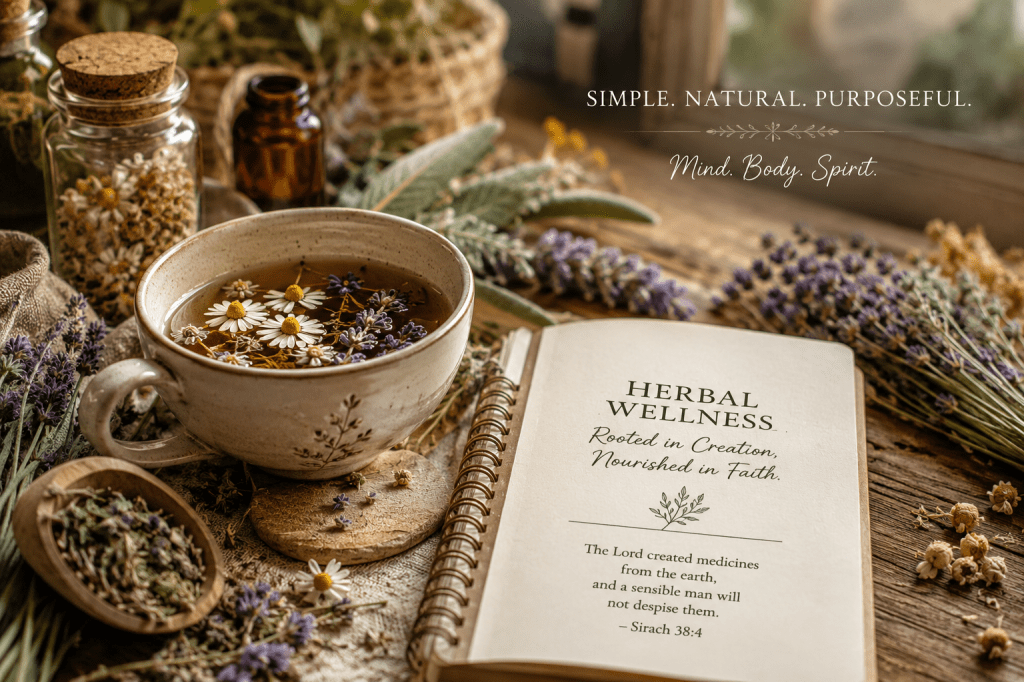
Beginning a journey into herbal wellness can feel both exciting and overwhelming.
There is so much information available that it can quickly become difficult to know where to start, what is trustworthy, and what is actually practical for everyday life.
The truth is, herbal wellness does not need to be complicated.
At its heart, it is simply the practice of using the gifts found in creation to gently support the body and encourage overall well-being.
Scripture reminds us:
“The Lord created medicines from the earth, and a sensible man will not despise them.”
— Sirach 38:4
Herbal wellness is not about perfection or trying to replace wisdom and discernment. It is about learning to work with the body in gentle, intentional ways while remaining rooted in truth and balance.
Start Small and Learn Slowly
One of the most common mistakes people make when beginning herbal wellness is trying to learn everything at once.
Instead, begin with one or two simple herbs and take time to understand how they work, how they are traditionally used, and how your body responds to them.
Herbal wellness is best approached slowly and thoughtfully.
A single cup of chamomile tea in the evening or adding peppermint to support digestion may seem simple, but these small rhythms often become the foundation of a more intentional and nourishing way of living.
The goal is not to build an overflowing apothecary overnight. The goal is to become familiar and comfortable with the gentle support herbs can offer in daily life.
Simple Beginner Herbs
Some herbs are especially approachable for beginners because they are gentle, widely loved, and easy to incorporate into daily routines.
Chamomile
Traditionally used to support relaxation, rest, and digestion. Chamomile tea is one of the simplest ways to begin working with herbs.
Peppermint
Often used to support digestion and provide a refreshing sense of clarity. Peppermint tea can be especially comforting after meals.
Lemon Balm
A gentle herb traditionally associated with calmness and nervous system support. It has a light, uplifting flavor that works beautifully in teas.
Ginger
Commonly used to support digestion and warmth in the body. Fresh ginger tea is simple, nourishing, and grounding.
Simple Ways to Begin
You do not need expensive tools or complicated preparations to begin incorporating herbs into daily life.
Start with simple, manageable rhythms such as:
- drinking one cup of herbal tea in the evening
- keeping dried peppermint or ginger in the kitchen
- learning how a single herb affects your body
- choosing simple, high-quality herbs when possible
- creating small moments of rest and intention around your herbal routines
Herbal wellness becomes most meaningful when it is woven naturally into everyday life rather than approached with pressure or urgency.
A Gentle Reminder
Herbs are powerful gifts from creation, but they should always be approached with wisdom and care.
Natural wellness is not about fear, perfection, or trying to control every aspect of health. It is about learning to support the body gently while remaining rooted in peace, balance, and discernment.
Start slowly. Learn patiently. Allow your routines to grow naturally over time.
Small steps are still meaningful steps.
Wherever you are in your journey, you are welcome here.


Leave a Reply