

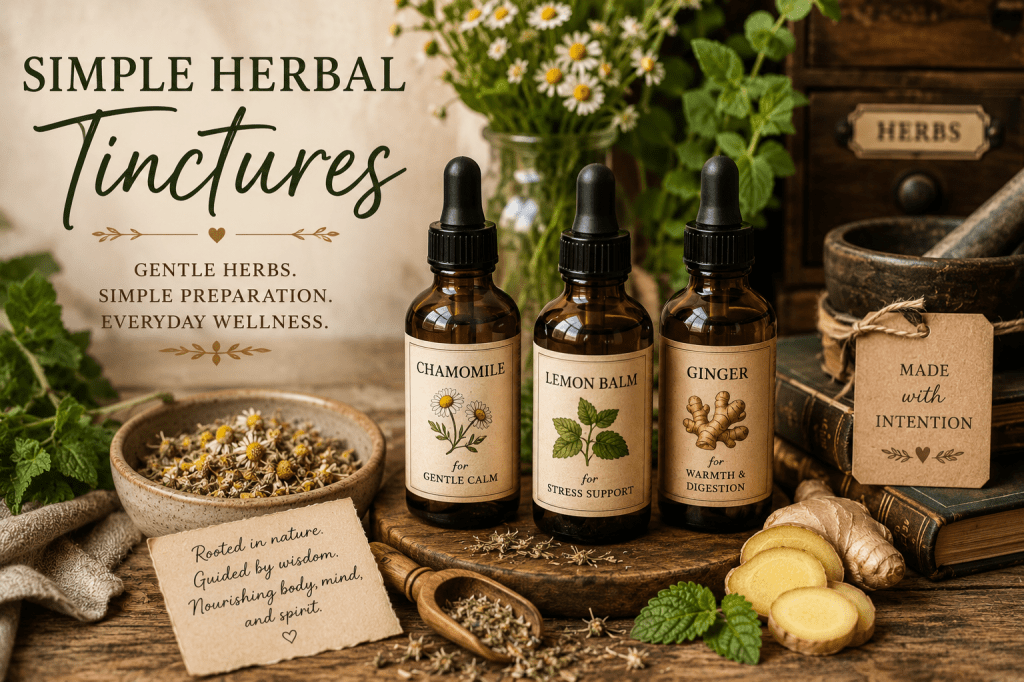
Herbal tinctures are one of the simplest and most traditional ways to work with herbs in everyday life.
Made by soaking herbs in alcohol or glycerin to draw out their beneficial properties, tinctures are concentrated, shelf-stable, and easy to incorporate into daily wellness routines.
For many people, tinctures feel more approachable than complicated herbal preparations because they require only a small amount and can be added easily to water, tea, or daily rituals.
The goal of herbal wellness is not to overwhelm the body with dozens of remedies, but to gently support everyday balance through simple and intentional practices.
“A joyful heart is good medicine, but a crushed spirit dries up the bones.”
— Proverbs 17:22
How to Make a Simple Herbal Tincture
Making herbal tinctures at home can be surprisingly simple.
Traditionally, tinctures are created by soaking herbs in alcohol or vegetable glycerin over time to draw out the beneficial properties of the plant.
For beginners, dried herbs and a simple jar are often all that is needed to begin.
Basic Herbal Tincture Method
- Fill a clean glass jar about halfway with dried herbs
- Pour vodka or vegetable glycerin over the herbs until fully covered
- Seal tightly with a lid
- Store in a cool, dark place for 4–6 weeks
- Shake gently every few days
- Strain herbs using cheesecloth or a fine mesh strainer
- Store liquid in a dark glass dropper bottle
Label each tincture clearly with the herb name and date.
Chamomile Tincture for Gentle Calm
Chamomile is one of the most beloved herbs for encouraging calmness, rest, and gentle nervous system support.
While many people enjoy chamomile as a tea, tinctures offer a convenient option for those who prefer a more concentrated and shelf-stable preparation.
Chamomile tincture can become a simple part of an evening wind-down routine or moments when the body feels tense and overstimulated.
Simple Chamomile Tincture
- ½ cup dried chamomile flowers
- vodka or vegetable glycerin to cover
Follow the basic tincture method above and allow to infuse for 4–6 weeks before straining.
Simple Ways to Use
- Add a small amount to warm tea or water
- Use as part of an evening relaxation routine
- Pair with quiet activities like reading, prayer, or journaling
Because chamomile is considered a gentle herb, it is often one of the easiest tinctures for beginners to become familiar with.
Lemon Balm Tincture for Everyday Stress Support
Lemon balm is a soft, citrusy herb traditionally used to support emotional balance, nervous system calmness, and a more settled sense of well-being throughout the day.
Its gentle nature makes it especially approachable for beginners and beautiful for creating slower daily rhythms during stressful seasons of life.
Many people enjoy lemon balm tincture during busy afternoons, emotionally overwhelming days, or moments when they need encouragement to pause and breathe more deeply.
Simple Ways to Use
- Add to water or herbal tea
- Pair with quiet moments of rest or prayer
- Incorporate into gentle evening routines
Simple Lemon Balm Tincture
- ½ cup dried lemon balm
- vodka or vegetable glycerin to cover
Follow the basic tincture method above and allow to infuse for 4–6 weeks before straining.
Ginger Tincture for Warmth & Digestion
Ginger is one of the most familiar and approachable herbs for supporting digestion and creating a sense of warmth within the body.
Traditionally used to encourage digestive comfort and circulation, ginger can become a beautiful herbal companion during colder months or after heavy meals.
Its naturally warming nature makes it especially comforting during slow morning routines and cozy evening rituals.
Simple Ways to Use
- Add a small amount to warm water or tea
- Use before or after meals
- Pair with lemon and honey for a warming herbal drink
Simple Ginger Tincture
- ½ cup sliced fresh ginger
- vodka to fully cover
Allow to infuse for 4–6 weeks before straining.
Because fresh ginger contains water, alcohol is generally preferred over glycerin for this preparation.
Keeping Herbal Wellness Simple
Herbal wellness does not need to feel overwhelming or complicated.
Often, the most meaningful routines are the simplest ones—learning a few gentle herbs well, creating small rhythms of care, and allowing wellness practices to become part of everyday life naturally over time.
A tincture tucked into a kitchen cabinet, added quietly to tea, or incorporated into a calming evening routine may seem like a small thing, but these small practices often become the roots of lasting habits and intentional living.
Start slowly. Learn patiently. Allow your herbal journey to grow gently and sustainably.
Sometimes the quietest routines become the most nourishing ones.


Leave a Reply