

Simple ways to build a foundation for everyday wellness
A new vitamin. An herbal blend. Another powder promising better energy.
When we want to feel better, it is understandable to look for something we can add to our routine. But before buying another bottle, it helps to pause and consider what everyday nourishment looks like.
Are meals getting squeezed out of busy days? Is the refrigerator full of ingredients but nothing easy to eat? Has caring for ourselves become so complicated that we hardly know where to begin?
These questions offer a practical starting place.
Begin by making one meal easier
Choose the meal that most often gets overlooked. Perhaps breakfast is coffee, or lunch happens only after everyone else has eaten.
Plan one dependable option you enjoy and can realistically prepare:
- Oatmeal with nut butter and fruit.
- Eggs or tofu with whole-grain toast.
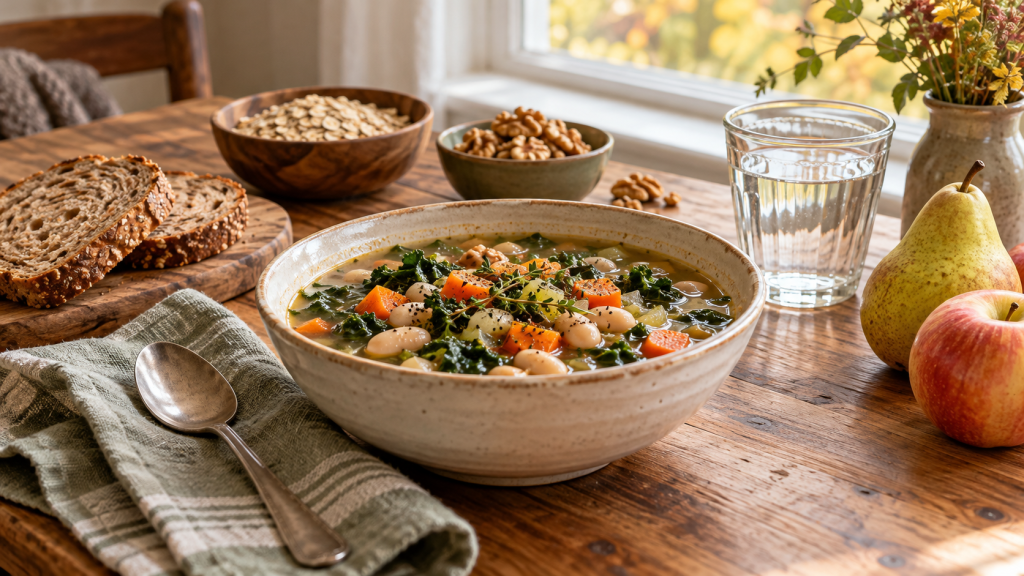
- Lentil soup with bread and a side of vegetables.
- A baked potato topped with beans, broccoli, and olive oil.
A varied eating pattern that includes vegetables, fruit, whole grains, protein foods, and appropriate dairy or fortified alternatives provides a range of essential nutrients. You can build toward that variety over time.
Give convenience a place in your kitchen
Nourishing meals do not have to begin with chopping, soaking, and simmering every ingredient yourself.
Frozen vegetables, canned beans, plain oats, precooked grains, and ready-to-eat fruit can make meals more manageable. Keep a few combinations in mind:
- Frozen vegetables, brown rice, and tofu.
- Canned white beans, tomatoes, and whole-grain toast.
- Plain yogurt or fortified soy yogurt with oats and berries.
Choose foods that fit your budget, preferences, allergies, and medical needs. A simple meal you can prepare on a tired evening deserves a place in your routine.
Look at the purpose of each supplement
Supplements can be useful. Some people need them because of a diagnosed deficiency, pregnancy, a restricted diet, difficulty absorbing nutrients, or another medical reason. They cannot replace the full variety of foods in a balanced eating pattern.
Before adding something new, ask:
- What specific need is this intended to address?
- What evidence supports using it?
- What dose and duration are appropriate?
- Could it interact with my medications or other supplements?
Keep an updated list of everything you take, including herbal products, and review it with your clinician or pharmacist. Combining products can duplicate ingredients, and higher doses can increase the risk of harm. Continue supplements prescribed for a medical need unless your clinician advises otherwise.
Make room for individual needs
Food advice should leave room for real life. Chronic illness, food allergies, digestive conditions, limited income, and fatigue can all affect what someone can eat or prepare.
If your diet has become very limited, a registered dietitian can help you work toward adequate nourishment within those limits. Persistent or unexplained symptoms also deserve medical evaluation rather than repeated attempts to find the right supplement.
Needing help does not mean you have failed at caring for yourself.
Choose one step for this week
Pick one meal to make easier. Write down what you need, keep those ingredients available, and give yourself permission to repeat it.
For those of us who approach wellness through faith, this ordinary care can be an act of stewardship. Feeding ourselves with patience and attention is one small way to honor the life entrusted to us.
You can begin with your next meal.


Leave a Reply