

A practical guide to choosing and enjoying herbs thoughtfully
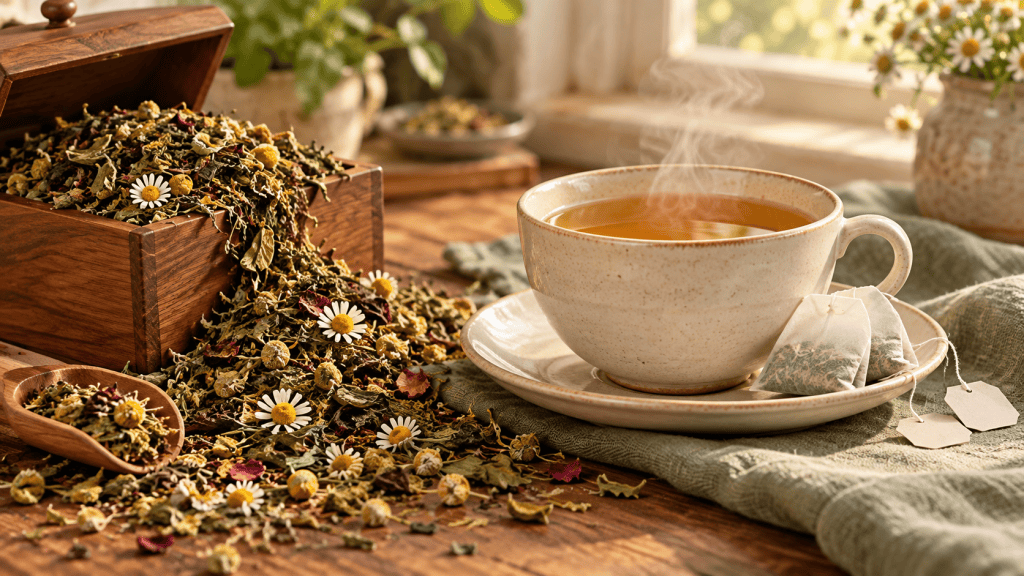
A warm cup of herbal tea can be a pleasant part of an ordinary day. Perhaps you enjoy the bright scent of peppermint, the floral taste of chamomile, or the warmth of ginger.
But the tea aisle can also be confusing. Packages promise restful sleep, better digestion, cleansing, and immune support. How do you decide what belongs in your cup?
Begin with the ingredients, the reason you are choosing them, and your individual health needs.
Start with the Ingredient List
The name on the front of a package tells only part of the story. Turn it over and read the full list.
For a tea you are considering, ask:
- Which plants does it contain?
- Does it identify the plant part, such as leaf, flower, or root?
- Are there ingredients you have reacted to before?
- Does it contain black tea, green tea, or another source of caffeine?
- Are there directions or precautions?
A single-ingredient tea can make it easier to understand what you are drinking. Blends can be enjoyable, but each additional herb adds something else to consider.
Match the Evidence to the Product
Research on an herb does not automatically establish the benefits of every product made from it.
A study might use a concentrated extract, a capsule, or a specific combination of ingredients. Your tea may contain a different amount or preparation. NCCIH notes that herbal products sold to consumers may differ in important ways from those tested in research.
Peppermint provides a useful example. Some evidence supports enteric-coated peppermint oil capsules for irritable bowel syndrome symptoms. That evidence does not establish that a cup of peppermint leaf tea offers the same treatment effect.
You can enjoy a tea for its flavor and warmth without expecting it to treat a medical condition.
Familiar Herbs Still Deserve Attention
An herb can have a long history of use and still be unsuitable for a particular person.
Chamomile: Medication interactions have been reported, including with warfarin. If you take medication, ask your pharmacist or clinician whether chamomile is appropriate for you.
Licorice root: Sometimes included in blends for sweetness, licorice containing glycyrrhizin can cause serious adverse effects. People with high blood pressure or heart or kidney conditions may be particularly vulnerable. Check the ingredients even when licorice is not mentioned on the front of the box.
During pregnancy or breastfeeding, before surgery, or when choosing herbs for children, seek advice specific to the ingredient and person. Safety information is limited for many herbal products.
Brew According to the Product
For a packaged herbal tea, follow its preparation directions, including the amount, water temperature, and steeping time.
There is no single brewing method that suits every plant or product. Avoid assuming that adding more herbs or steeping much longer will make a tea more beneficial.
Use clean equipment and herbs sold for food or tea use. Store them according to the package directions, protected from moisture.
Keep Your First Choice Simple
Before purchasing several blends, choose one tea that suits your preferences and has been checked for any relevant precautions.
Notice the practical details:
- Do you enjoy the flavor?
- Does the preparation fit your routine?
- Do you feel well after drinking it?
- Are you choosing it for enjoyment or trying to manage a persistent symptom?
If a tea causes unwanted effects, stop using it and seek appropriate advice. Persistent symptoms deserve evaluation rather than an ongoing search for a stronger blend.
A Thoughtful Place for Herbs
Herbal learning can begin with one plant and a few good questions. You do not need an overflowing cupboard to enjoy it.
At Holy Roots, appreciation for God’s creation belongs alongside careful learning. Understanding what we use helps us approach that creation with gratitude, discernment, and care.


Leave a Reply