

What to do after too many treats, and how to choose your sweeteners
It starts with a handful of candy from the bowl on the counter. Then comes a pumpkin muffin, a flavored coffee, and a little something sweet after dinner.
By the time Christmas baking arrives, sweets seem to have found their way into every corner of the day.
There is room for favorite desserts and family recipes. But when occasional treats become an all-day habit, it helps to pause and make a few adjustments.
And if you have already eaten more sugar than you intended? Begin with a little kindness toward yourself.
What to do after too many sweets
You do not need to skip tomorrow’s breakfast or find a cleanse. There is no tea, supplement, or special food that cancels out the sugar you have eaten.
For most people, the practical next step is to return to their usual meals.
When you are comfortably hungry again, put together something satisfying: vegetable soup with beans, eggs with whole-grain toast, or tofu with rice and vegetables. Include protein and fiber-containing foods rather than trying to get through the rest of the day on coffee. These foods belong in a balanced eating pattern, whether or not dessert was involved.
Have some water if you are thirsty. It supports normal hydration, but it does not “flush out” sugar. There is no need to force large amounts.
If you feel well, a comfortable walk is another option. Movement helps your muscles use glucose and can support blood sugar management. Think of it as an enjoyable part of the evening, without making it repayment for dessert. If you use insulin or medication that can cause low blood sugar, follow your care plan around exercise.
If you have diabetes and your glucose is high, follow your prescribed plan rather than relying on these general suggestions. Repeated episodes of shakiness, unusual thirst, or feeling unwell after eating deserve a conversation with your clinician.
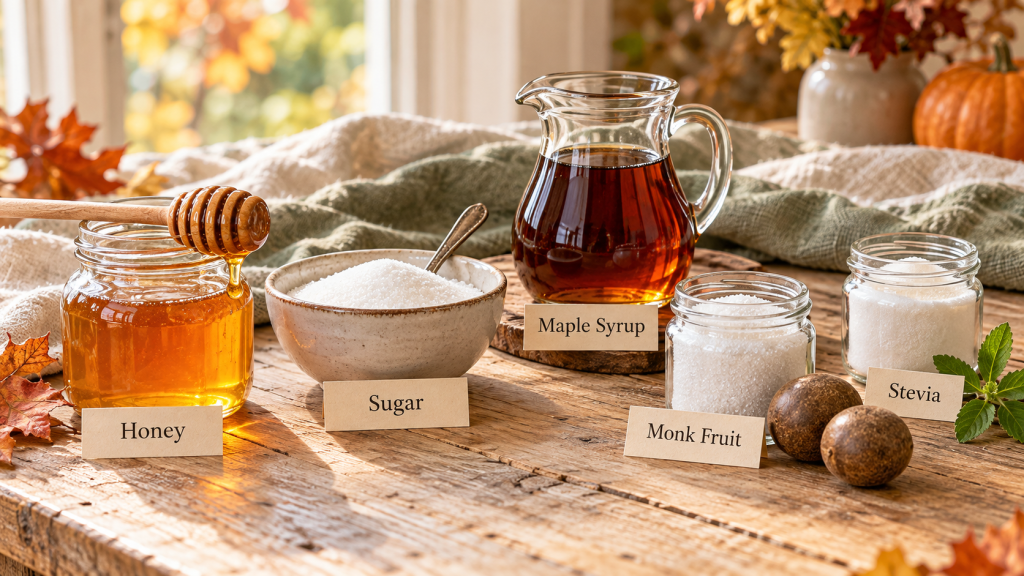
What about honey, monk fruit, and other alternatives?
The answer depends on what you want the substitute to do. Are you looking for a flavor you enjoy, less added sugar, or sweetness without much effect on blood glucose? Those are different goals.
Honey and pure maple syrup
A little honey in tea or maple syrup over oatmeal can be delicious. Their distinctive flavors may help you feel satisfied with a smaller amount.
They still contribute added sugar, though. “Raw,” “local,” and “pure” do not make them sugar-free, and honey still raises blood glucose. Choose them for their flavor and measure the drizzle if you are trying to use less.
Monk fruit
Monk fruit extract provides intense sweetness with little or no calories and generally does not raise blood glucose on its own. It can be useful when you want to reduce added sugar in a drink or recipe.
Check the whole package, however. A product labeled “monk fruit sweetener” may be a blend. Look for other ingredients, check total carbohydrates, and follow the product’s substitution directions. Pure extract is much sweeter than sugar, so it is not a cup-for-cup baking replacement.
Stevia
Purified stevia sweeteners offer another way to sweeten foods without adding sugar. They are very concentrated, and some people notice an aftertaste. Start with the amount directed on the package and adjust cautiously.
With either stevia or monk fruit blends, watch for sugar alcohols such as erythritol or sorbitol. These can cause gas, bloating, or diarrhea in some people, especially in larger amounts.
Fruit
Sometimes the simplest option is already in the fruit bowl.
Try mashed banana in oatmeal, berries stirred into plain yogurt, or a baked apple with cinnamon. Whole fruit brings fiber along with sweetness. Dried fruit and date paste are more concentrated, so portions still matter.
Cinnamon, vanilla, and citrus zest can also add inviting flavor, helping a dish feel complete with less sweetener.
Make the season easier on yourself
Pick one place where sugar has quietly become automatic.
Perhaps you could order your usual coffee less sweet, move the candy bowl away from your workspace, or buy plain oatmeal and add your own toppings. At a gathering, choose the dessert you really want, sit down, and enjoy it.
You can also freeze extra baking in small portions instead of leaving everything on the counter.
There is no need to replace every family recipe or turn every celebration into a nutrition project. A few thoughtful everyday choices leave room for the sweetness you truly enjoy.
Caring for ourselves can include both a nourishing meal and a slice of pie shared with someone we love.


Leave a Reply